

Key Takeaways
- Design plus Adaptation: A robot companion AI combines pre-set traits with adaptive learning to build a distinct presence.
- Smart Memory: A personal AI robot companion uses stored preferences to make every interaction feel continuous and tailored.
- Physical Expression: Body language, speech speed, and visual cues make an AI powered companion robot feel approachable and alive.
- Simulation, Not Feeling: Robots show personality traits through programming and math, not actual human feelings or self-awareness.
Robot personality comes from a mix of smart software, memory storage, sensory inputs, and adaptive behavioral rules. The system does not possess human feelings or self-awareness. Instead, repeating daily habits and sharing space with a device allows an AI robot companion to adjust its tone and actions. Over time, these subtle changes make the device feel tailored to your specific household routine.

What Does Robot Companion Mean?
What is the true robot companion meaning? Unlike standard utility devices built only to vacuum floors or turn off lights, these machines prioritize social presence, interactive dialogue, and ongoing engagement. They aim to build a sense of connection through daily visual and vocal contact.
| Feature | Standard Task Assistant | Companion AI Robot |
|---|---|---|
| Primary Goal | Complete functional chores fast | Provide ongoing social interaction |
| Response Style | Direct, transaction-focused | Expressive, conversational, adaptive |
| User Relationship | Utility tool | Interactive household presence |
| Long-Term Learning | Utility settings & schedules | Personal habits, tone, preferences |
Traditional assistants wait for direct commands, fulfill the request, and turn off. An interactive system stays involved, encouraging back-and-forth communication while adapting to your regular patterns.
Where Does an AI Robot's Personality Come From?
Every expressive machine starts with a strong blueprint built by developers. This framework sets the base rules for how the system speaks, moves, and reacts.
Personality Traits and Behavioral Rules
Engineers build specific foundational traits into the control software, including:
- Friendliness: Welcoming greetings and lighthearted phrasing.
- Curiosity: Asking questions about your day or local environment.
- Playfulness: Offering games, jokes, or cheerful sounds.
- Talkativeness: Deciding how brief or detailed verbal answers should be.
- Empathy: Adjusting language when users show stress or fatigue.
- Proactivity: Reaching out without waiting for a command.
- Calmness: Maintaining steady, quiet responses during quiet hours.
How Personality Becomes Behavior
Software settings translate into real-world actions through multi-sensory signals:
- Tone of Voice: Shifting pitch to sound excited or gentle.
- Word Choice: Picking casual phrases instead of stiff, formal data.
- Response Style: Balancing quick answers with conversational follow-up questions.
- Movement: Tilting hardware modules to show interest or nodding along.
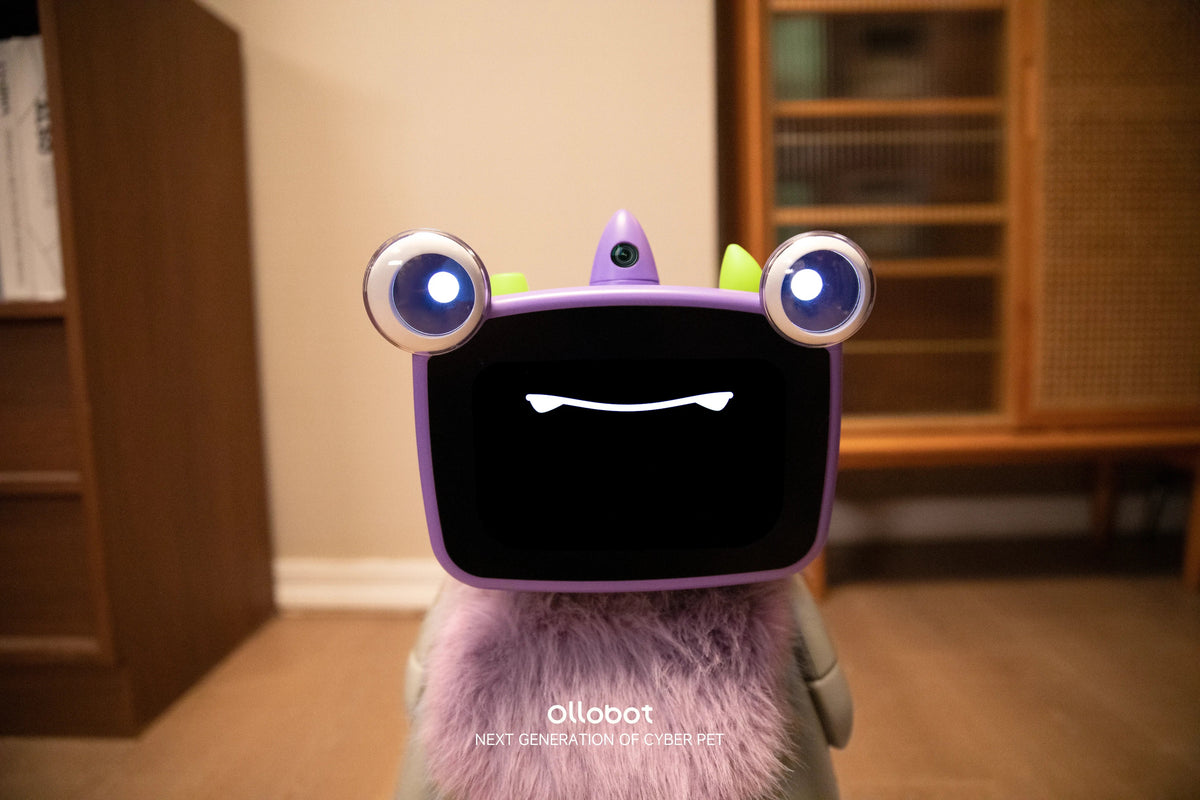
- Facial Expressions or Visual Cues: Changing display graphics, light rings, or eye animations.
- How Often the Robot Initiates Interaction: Controlling how often the device speaks up on its own.
Research on expressive home robots shows that personality can be communicated through speech, intonation, movement, and other behavioral cues.
How Does an AI-Powered Companion Robot Learn From Interaction?
Continuous learning relies on a constant flow of sensory information. Processing this input allows the internal system to select appropriate actions smoothly.
Sensors and Perception
Hardware inputs gather real-time data from surrounding rooms:
- Voice and Speech: Hearing vocal commands and identifying distinct speakers.
- Vision: Identifying faces, tracking physical gestures, and scanning environments.
- Touch: Detecting physical pats, taps, or gentle handling.
- Environmental Information: Reading room light levels, noise levels, and motion patterns.
Understanding the User
Internal processing interprets what those sensory signals mean in context:
- Recognizing Preferences: Identifying individual user preferences and names.
- Understanding Context: Tracking surrounding ambient noise to gauge room context.
- Detecting Conversational Patterns: Spotting repeated conversation trends and favorite topics.
- Recognizing Changes in Mood or Behavior: Sensing subtle changes in user tone or posture.
Choosing a Response
Once the system processes input data, the core AI model picks the best output path. The underlying personality rules guide word selection, vocal pitch, and physical gestures. An AI-powered companion robot can use these capabilities to make its behavior more context-aware and socially believable.
How Does Memory Shape a Personal AI Robot Companion?
Memory turns simple software into a partner that is truly unique to you. By keeping track of past interactions, the system can become more consistent over time, even across weeks and months.

What Can a Robot Remember?
- Names: Identifying family members and titles.
- Preferences: Storing favorite topics, media, or daily schedules.
- Past Conversations: Remembering mentioned interests and past discussions.
- Favorite Activities: Recalling preferred games or routines.
- Interaction Habits: Noting reaction habits to specific audio tones or actions.
- User Responses: Saving time preferences for interactions versus quiet time.
How Memory Changes Future Interactions
If a user enjoys frequent conversation, the robot may become more proactive. If the user prefers quiet interaction, it may become less intrusive after work hours.
Why Long-Term Memory Matters
Retaining personal context creates continuity and reduces repetitive interactions. You skip repeating preferences every morning, which makes responses feel personalized and helps establish a consistent relationship over time.
Can AI Robots Adapt Their Personalities?
Adapting to users does not mean a system completely resets its identity daily. Balancing stable baseline traits with flexible responses creates a reliable user experience.
- Personality: Relatively consistent behavioral characteristics set by original designers.
- Personalization: Adapting those behaviors to a particular user or situation.
This approach creates a system with a stable core personality plus flexible behavior. A cheerful system stays fundamentally optimistic, yet it tones down volume and limits extra chatter when a user appears busy or stressed.
| Situation | High Proactivity User | Quiet / Busy User |
|---|---|---|
|
Morning Interaction |
Initiates greetings, shares news | Waits for direct command, stays soft |
|
Conversational Style |
Longer answers, asks follow-ups | Brief, direct facts |
|
Physical Movement |
Active gestures, frequent eye-contact | Subtle motion, minimal displays |
A robot can remain playful while becoming more talkative with one user, more relaxed with another, more proactive during play, or quieter when the user appears busy. This avoids suggesting that the robot completely changes its personality every day.
How Do Voice and Movement Make a Robot Feel More Human?
Words alone cannot convey a full personality. The physical body gives software an expressive outlet that pure screens or text prompts lack.
Hardware embodiment amplifies social signals through coordinated physical outputs:
- Voice and Tone: Shifting pitch to project warmth or excitement.
- Speaking Speed: Faster speeds project high energy, while lower speeds sound grounded.
- Facial Expressions: Screen animations or lighting shifts signal active listening.
- Gestures: Soft tilts express attention and curiosity.
- Movement: Turning toward an active speaker shows direct focus.
- Response Timing: Pausing briefly before speaking imitates natural human conversational flow.
- Proximity and Physical Behavior: Adjusting distance to respect personal space.
The same AI model can feel completely different depending on how its personality is expressed. Embodiment gives a physical AI robot companion additional ways to communicate personality.

Do AI Robots Really Have Personalities?
It helps to step back and look at the actual computing power driving these devices. Appreciating social design becomes easier when separating clever programming from actual feelings.
Personality Does Not Mean Consciousness
- AI robots do not necessarily experience emotions like humans; they generate output based on statistics.
- Expressing happiness through a cheerful chime or graphic does not prove the robot feels happiness.
- Remembering a user does not necessarily mean the robot understands relationships in a human sense; it is data retrieval.
Why Do Robots Still Feel Like They Have Personalities?
We naturally attach human traits to moving objects that respond to us. Consistent behavior, personalized responses, long-term memory, emotional cues, and smooth social interaction trigger the human tendency to anthropomorphize machines.The key distinction remains simple: A robot can have a recognizable personality without having a human-like inner life.
Building a Natural Persona for Your Personal AI Robot Companion
Developing a relatable persona relies on combining baseline programming, live perception, memory, and expressive movement. Repeated interaction allows an AI robot companion to adapt to daily habits while keeping its core traits stable. This continuous learning turns a basic home device into a reliable, engaging presence that fits naturally into your home.

Frequently Asked Questions
Q1: Can AI Robots Develop Their Own Personalities?
No, robots cannot create entirely original personalities from scratch. They operate on programmed baseline rules, using interaction history to fine-tune how they talk, react, and move over time.
Q2: Can You Reset or Change a Robot Companion's Personality?
Yes, most companion systems allow users to adjust settings through a smartphone app or voice command. You can reset memory logs or select a different behavioral profile—such as shifting from playful to quiet—at any time.
Q3: What Happens to a Robot's Learned Personality if the Internet Goes Down?
The robot maintains its core personality traits and basic movement patterns offline. However, cloud connectivity is usually needed for complex memory updates and deep voice interaction.
Q4: Do AI Companion Robots Have Real Emotions?
No. While a robot can display glowing eyes, cheerful sounds, or drooping movements to show sympathy, these actions are purely calculated software outputs rather than genuine feelings.


Leave a comment
This site is protected by hCaptcha and the hCaptcha Privacy Policy and Terms of Service apply.